8975 S. Pecos Rd. #5A Henderson, NV 89074


By Ascend Dental Studio | August 10, 2026
If you live in Henderson, Paradise Hills, Clark County, or one of the surrounding communities, you may have noticed that your teeth do not come together quite the way they should. Maybe your upper teeth overlap your lower teeth, you have gaps between your teeth, or certain teeth sit in front of or behind others when you bite down.
These bite concerns are common, but that does not mean every case requires the same type of treatment. Invisalign can correct many alignment and bite problems, but its effectiveness depends on the type and severity of the issue.
Understanding what Invisalign can realistically treat can help you know what to expect before scheduling a consultation.
What Can Invisalign Treat?
Invisalign uses a series of custom-made, clear aligners to gradually move teeth into more favorable positions. For many patients, it can correct both cosmetic alignment concerns and certain bite problems. If you are also interested in how clear aligners can straighten teeth without traditional metal braces, learn more about Invisalign for straightening your teeth without the metal.
An Invisalign dentist in Henderson may recommend clear aligners for conditions such as:
- Mild to moderate crowding: Teeth that overlap because there is not enough room in the dental arch
- Spacing and gaps: Extra space between teeth that affects the appearance or function of your smile
- Mild overbite: When the upper front teeth extend too far over the lower front teeth
- Mild underbite: When the lower teeth sit in front of the upper teeth
- Certain crossbites: When some upper teeth sit inside the lower teeth when you bite down
- Certain open bites: When some teeth do not meet when your mouth is closed
Invisalign can be particularly effective when the bite problem is primarily related to the position of the teeth. More complex cases may require additional orthodontic appliances or a different treatment approach.
That is why an evaluation is important before deciding whether Invisalign in Henderson is appropriate for you.
When Might Invisalign Not Be the Best Option?
Clear aligners are versatile, but they are not the right solution for every bite problem. The severity of the condition, the position of the teeth, the health of your gums and supporting bone, and other factors can affect whether predictable tooth movement is possible.
Invisalign may not be the best option when you have:
Severe Crowding
Mild to moderate crowding can often be addressed with clear aligners. Severe crowding may require additional space to be created before the teeth can be aligned properly. In some cases, traditional braces, tooth extraction, or other orthodontic techniques may be recommended.
A Significant Overbite or Underbite
A mild bite discrepancy may respond well to Invisalign. More significant overbites and underbites can involve complex tooth movement or underlying jaw relationships that may require additional orthodontic treatment.
Complex Tooth Rotations
Aligners can rotate many teeth, but certain teeth and more severe rotations can be difficult to move predictably with clear aligners alone.
Significant Vertical Tooth Movement
Moving teeth vertically, meaning up or down within the supporting bone, can be more challenging than simple tipping or horizontal movement. Some cases require additional attachments or orthodontic techniques.
Complex Dental Restorations
Crowns, large fillings, implants, and other restorations do not automatically rule out Invisalign. However, they can affect treatment planning and how predictably certain teeth can move. Your dentist needs to evaluate the condition and position of these teeth before treatment begins.
The important point is that being told Invisalign is not the best option does not mean your bite cannot be corrected. It means another treatment approach may provide a more predictable result.
How an Invisalign Dentist Evaluates Your Bite
Determining whether you are a good candidate for Invisalign involves more than looking at whether your teeth appear crooked.
During an evaluation, your dentist may examine:
- How your upper and lower teeth come together
- The amount of crowding or spacing present
- The position and rotation of individual teeth
- Your gum and periodontal health
- Existing fillings, crowns, and other restorations
- The condition of your teeth and supporting bone
- Your overall oral health and treatment goals
Digital scans and dental imaging may also be used to create a more complete picture of your bite and tooth positioning.
This evaluation is important because the problem you see in the mirror may not be the only factor affecting your bite. For example, what appears to be a simple overbite may involve tooth positioning that requires a more detailed treatment plan.
If you have active tooth decay, gum disease, or an untreated dental infection, those concerns generally need to be addressed before starting aligner treatment. Healthy teeth and gums provide a better foundation for predictable orthodontic movement.
Crowding vs. Spacing: Can Invisalign Treat Both?
Crowding and spacing are two of the most common reasons patients consider clear aligners, but they require different treatment strategies.
Crowding occurs when there is not enough room for teeth to fit properly within the dental arch. Invisalign can often correct mild to moderate crowding by gradually repositioning the teeth. More severe crowding may require additional treatment to create adequate space.
Spacing occurs when there are noticeable gaps between teeth. Invisalign can close many types of gaps by gradually bringing the teeth together. However, the reason for the spacing matters.
For example, a gap may be related to tooth size, the position of the teeth, missing teeth, or the tissues surrounding the teeth. Closing the space without addressing the underlying cause may not provide the most stable long-term result.
This is another reason a personalized evaluation matters. Two patients can have teeth that look similar but require very different treatment plans.
Can Invisalign Fix a Bite Problem and Straighten Teeth at the Same Time?
In many cases, yes.
One advantage of Invisalign is that treatment can address multiple alignment concerns as the teeth are gradually repositioned. A patient may have crowding along with an overbite, for example, and the treatment plan can be designed around both concerns.
However, the ability to correct multiple problems depends on their severity and underlying cause.
An Invisalign dentist in Henderson may determine that clear aligners can address your concerns independently, while another patient may need additional orthodontic treatment. The goal should not simply be to make the teeth look straighter. Your bite also needs to function properly after treatment.
What If You Have Other Dental Problems Before Invisalign?
Your teeth and gums should be healthy before beginning orthodontic treatment.
If you have a cavity, gum disease, a damaged tooth, or an infection, those problems may need to be treated first. For example, an infected tooth that requires root canal treatment should generally be addressed before attempting to move it with an aligner.
Existing dental work also deserves attention during treatment planning. Crowns, bridges, fillings, and other restorations may affect how teeth can be moved and whether additional care is needed.
Taking care of these issues first can help create a healthier foundation for Invisalign treatment and reduce the risk of complications during the alignment process.
Meet Your Invisalign Dentist in Henderson
At Ascend Dental Studio, Dr. Timothy Luong takes a comprehensive approach when evaluating patients interested in Invisalign. Rather than assuming clear aligners are appropriate based only on how your smile looks, he considers your bite, tooth position, oral health, existing dental work, and long-term goals.
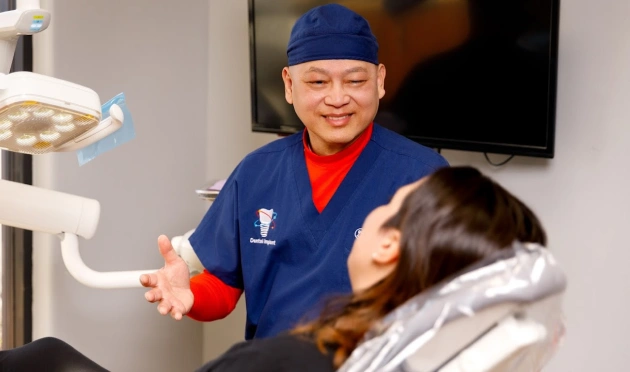
For patients considering Invisalign in Henderson, the consultation is an opportunity to understand what is realistically achievable and whether clear aligners are the right treatment for their specific needs.
If your case is better suited to another approach, Dr. Luong can explain your alternatives and why they may provide a more predictable result. The goal is to recommend treatment based on your individual needs, not simply to recommend Invisalign because you asked about it.
Ready to find out whether Invisalign is right for your bite? Schedule an appointment with Dr. Timothy Luong and the Ascend Dental Studio team to discuss your smile and treatment options.
Frequently Asked Questions
Can Invisalign fix a severe overbite?
Invisalign can correct many mild to moderate overbites. A severe overbite may require additional orthodontic appliances, traditional braces, or another treatment approach depending on what is causing the bite problem. An evaluation is necessary to determine which option is most appropriate.
Can Invisalign fix an underbite?
Invisalign can correct certain mild to moderate underbites, particularly when the issue is primarily related to tooth position. More significant underbites may involve the relationship between the upper and lower jaws and require more comprehensive orthodontic treatment.
Can Invisalign fix a crossbite?
Invisalign can correct certain types of crossbite by gradually repositioning the affected teeth. However, the treatment approach depends on whether the crossbite is caused by tooth position or a more complex skeletal issue.
How long does Invisalign take for bite problems?
Treatment time depends on the type and severity of the bite problem, the amount of tooth movement required, and how consistently the aligners are worn. Some mild cases may be completed within several months, while more complex cases can take a year or longer. Your dentist can provide a more specific estimate after evaluating your bite.
Does my dental health affect whether I qualify for Invisalign?
Yes. Active tooth decay, gum disease, or untreated dental infections generally need to be addressed before starting Invisalign. Your dentist will evaluate your oral health as part of the candidacy process.
Is Invisalign a good option for adults with bite problems?
Many adults are candidates for Invisalign. Age itself does not determine whether clear aligners will work. The more important factors are your oral health, tooth position, bite, bone support, and the complexity of the movements required.
What should I expect during an Invisalign consultation?
Your dentist will evaluate your teeth, bite, gums, and existing dental work. Digital scans and imaging may be used to better understand your tooth positions and develop a treatment plan. You can also discuss your goals, expected treatment time, and whether Invisalign or another option is best suited to your case.